
Why Is My Chime Direct Deposit Late This Month?
If your Chime Direct Deposit Late this month has you wondering where your paycheck is, you’re not alone. Many Chime users occasionally experience delayed direct deposits, especially around weekends, banking holidays, payroll processing changes, or employer-related delays. Waiting for a paycheck that normally arrives on time can be frustrating, particularly if you rely on those funds to cover bills or everyday expenses.
The good news is that a Chime Direct Deposit Late issue doesn’t always mean something is wrong with your account. In many cases, the delay originates with your employer, payroll provider, or the bank sending the funds rather than Chime itself. Temporary processing delays, updated payroll information, or banking holidays can all affect when your deposit becomes available.
Understanding why your Chime Direct Deposit Late this month is the first step toward resolving the issue. Instead of assuming the deposit has been lost, it’s important to check your payroll information, account details, and any recent changes that could affect processing.
In this guide, you’ll learn why a Chime Direct Deposit Late issue happens, when direct deposits usually arrive, and the most effective ways to track down and resolve the delay.
Quick Answer
If your Chime Direct Deposit Late this month, first check whether your employer has processed payroll, verify your direct deposit information, review your Chime notifications, and consider whether a weekend or banking holiday may have delayed processing. If everything appears correct, contact your employer or Chime Support for an update.
Table of Contents
Why Is My Chime Direct Deposit Late?
Short Answer: A Chime Direct Deposit Late issue is commonly caused by payroll processing delays, employer submission times, banking holidays, incorrect account information, or temporary processing delays between financial institutions.
Although Chime may make direct deposits available as soon as it receives them, it cannot release funds before the sending institution submits and processes the payment. This means the timing often depends on your employer and payroll provider rather than Chime itself.
Most delayed deposits are resolved once payroll processing is completed.
When Do Chime Direct Deposits Normally Arrive?
Short Answer: A Chime Direct Deposit Late situation can vary because deposit timing depends on when your employer or payroll provider sends the funds to Chime.
Many users receive their direct deposits earlier than with traditional banks, but early availability isn’t guaranteed for every paycheck. Processing schedules, employer payroll practices, and banking holidays can all affect when funds become available.
Understanding this process helps explain why deposit times sometimes vary from one pay period to another.
Before You Report a Missing Deposit
Before assuming your paycheck is missing, perform a few quick checks.
Confirm your employer has already processed payroll, verify that your routing and account numbers are correct, review your Chime notifications for account alerts, and consider whether a recent holiday or payroll schedule change could affect the deposit.
These simple checks often explain a Chime Direct Deposit Late issue without requiring additional troubleshooting.
Ways to Troubleshoot a Late Direct Deposit
Fix 1: Check Your Payroll Processing Status
Start by confirming that your employer has completed payroll.
Even if your paycheck normally arrives on the same day each pay period, payroll submission times can occasionally change. If payroll hasn’t been processed yet, Chime won’t receive the deposit until it’s sent by your employer or payroll provider.
Checking payroll status is often the fastest way to understand a Chime Direct Deposit Late issue.
Fix 2: Verify Your Direct Deposit Information
Incorrect account information can delay deposits.
Review the routing number and account number your employer has on file to ensure they exactly match your Chime account. Even a small mistake can delay payroll processing until the information is corrected.
Verifying these details can prevent future Chime Direct Deposit Late problems.
Fix 3: Review Your Chime Account Notifications
Open the Chime app and check for any notifications related to your account.
Look for alerts about pending deposits, account verification, maintenance, or temporary restrictions that could affect your direct deposit. Reviewing these messages helps determine whether your Chime Direct Deposit Late issue is related to your account or another part of the payment process.

Comparison Table
| Fix | Purpose |
|---|---|
| Check payroll status | Confirm your employer has processed payroll |
| Verify direct deposit information | Ensure account details are correct |
| Review Chime notifications | Identify account-related alerts |
These first three fixes resolve many Chime Direct Deposit Late situations. In the next section, we’ll cover additional troubleshooting steps, explain why deposits sometimes remain delayed, and share practical tips that many Chime users overlook.
More Ways to Find the Cause
Fix 4: Contact Your Employer or Payroll Provider
If your deposit hasn’t arrived, ask your employer or payroll provider whether payroll has already been submitted.
In many cases, a Chime Direct Deposit Late issue begins before Chime receives the payment. Payroll providers can often confirm the submission date, whether the payment was successfully processed, and if any delays have occurred.
Obtaining this information helps determine whether the issue is related to payroll or banking.
Fix 5: Check for Banking Holidays
Banking holidays can affect direct deposit processing.
If payday falls near a federal banking holiday, the transfer may take longer because financial institutions aren’t processing payments on their normal schedule. Even when your employer submits payroll on time, the receiving bank may not receive the funds until processing resumes.
Considering the calendar often explains a Chime Direct Deposit Late issue.
Fix 6: Confirm There Are No Account Restrictions
Temporary account issues may occasionally affect account activity.
Open the Chime app and review your account for any alerts requesting additional information or indicating temporary limitations. While restrictions aren’t a common cause of delayed payroll, resolving any account issues ensures your deposit can be received without unnecessary interruptions.
Checking your account status helps eliminate another possible Chime Direct Deposit Late cause.
Fix 7: Review Recent Payroll Changes
Recent updates to your payroll information can delay a direct deposit.
If you’ve recently changed employers, switched payroll providers, updated your direct deposit details, or modified your pay schedule, your next paycheck may follow a different processing timeline.
Reviewing recent payroll changes often explains why a Chime Direct Deposit Late situation occurs unexpectedly.
Fix 8: Contact Chime Support
If your employer confirms the deposit has already been sent but you still haven’t received it, contact Chime Support.
Provide details about your expected payday, employer, and any payroll confirmation you’ve received. This information helps Support determine whether the deposit is pending or whether additional investigation is required.
Contacting Support is appropriate after you’ve ruled out payroll-related causes of a Chime Direct Deposit Late issue.
Fix 9: Wait for Payroll Processing to Finish
Sometimes the only solution is allowing additional processing time.
If your employer has recently submitted payroll, the deposit may still be moving through the banking system. Repeatedly checking your account every few minutes won’t speed up processing, so monitor your account periodically while waiting for updates.
Many Chime Direct Deposit Late issues resolve automatically once payroll processing is complete.
Why Your Deposit Is Still Delayed
Short Answer: A Chime Direct Deposit Late issue may continue because payroll hasn’t finished processing, banking holidays are delaying transfers, your employer submitted payroll later than usual, or additional processing is taking place between financial institutions.
If you’ve confirmed your account information is correct and your employer has already submitted payroll, monitoring your account and following up with the appropriate party is usually the best next step.
Common Problems
Users experiencing a Chime Direct Deposit Late issue often encounter one or more of these situations:
- Payroll submitted later than usual.
- Banking holiday delays.
- Incorrect routing or account number.
- Recent payroll information changes.
- Employer processing delay.
- Payroll provider delay.
- Pending bank-to-bank transfer.
- Temporary account notification.
- Deposit still being processed.
Reviewing these possibilities helps narrow down the source of the delay.
What Most Chime Users Overlook
One of the biggest misconceptions about a Chime Direct Deposit Late issue is assuming Chime controls exactly when every paycheck arrives. In reality, Chime can only make funds available after it receives the deposit from the sending institution. If your employer or payroll provider submits payroll later than normal, the deposit will naturally arrive later as well. Checking with your payroll department before assuming there’s a problem with Chime can save time and provide a faster explanation.
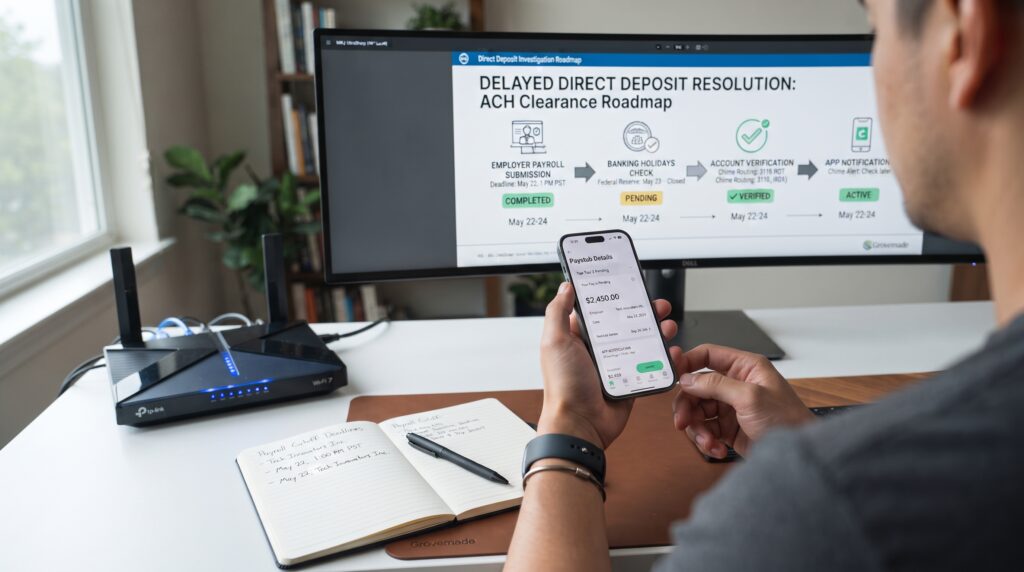
Comparison Table
| Problem | Recommended Solution |
|---|---|
| Payroll not processed | Contact your employer |
| Banking holiday | Allow additional processing time |
| Incorrect account details | Verify routing and account numbers |
| Recent payroll changes | Confirm updated payroll information |
| Deposit still pending | Wait for payroll processing |
| Issue continues | Contact Chime Support |
These nine troubleshooting methods resolve many Chime Direct Deposit Late issues. In the final section, we’ll answer frequently asked questions, explain how to reduce the chances of future deposit delays, discuss signs the delay originates with your employer, and summarize the most important takeaways.
How Late Can a Chime Direct Deposit Be?
A Chime Direct Deposit Late issue doesn’t always indicate a problem with your account. Processing times depend on when your employer submits payroll and when the sending financial institution releases the funds. If payroll is submitted later than usual or a banking holiday interrupts processing, your deposit may arrive later than previous pay periods. Monitoring your account and confirming payroll submission are the best first steps before assuming the deposit has been lost.
How to Prevent Future Deposit Delays
Although you can’t control your employer’s payroll schedule, you can reduce the chances of future Chime Direct Deposit Late issues by keeping your direct deposit information accurate and informing your employer immediately if you change your Chime account details. Regularly reviewing your payroll information, monitoring your Chime notifications, and staying aware of upcoming banking holidays can also help you better anticipate when your paycheck may arrive.
Signs the Delay Is From Your Employer
Several signs suggest that a Chime Direct Deposit Late issue originates with your employer rather than Chime. If coworkers who use different banks haven’t been paid yet, your employer confirms payroll hasn’t been submitted, or your pay schedule recently changed, the delay is likely related to payroll processing. Once payroll is transmitted successfully, Chime can begin processing the deposit as soon as it receives the funds.
Why Deposit Times Can Change Each Month
A Chime Direct Deposit Late issue doesn’t always mean there’s a problem with your account. Payroll schedules can vary from month to month, especially if your payday falls near a weekend, federal banking holiday, or the end of a pay period. Even if your paycheck usually arrives early, changes in your employer’s payroll processing time can affect when Chime receives the funds.
Understanding that direct deposits depend on multiple financial institutions—not just Chime—can help set realistic expectations and reduce unnecessary concern.
Tips While Waiting for Your Deposit
If your Chime Direct Deposit Late this month, start by confirming that your employer has already processed payroll. Then check your Chime account for notifications, verify your routing and account numbers, and make sure there aren’t any recent payroll changes affecting your deposit.
Avoid repeatedly checking your balance every few minutes. Instead, monitor your account periodically and keep any payroll confirmation information available in case you need to contact Chime Support.
When You Should Be Concerned
Most Chime Direct Deposit Late situations are resolved within normal payroll processing timelines. However, if your employer confirms the payment was sent several business days ago and your deposit still hasn’t appeared, it’s time to investigate further.
Gather any payroll confirmation, transaction references, or payment details before contacting Chime Support. Providing complete information helps the support team locate your deposit more efficiently and determine whether additional action is needed.

Frequently Asked Questions
How late can a Chime direct deposit be?
A Chime Direct Deposit Late issue can vary depending on your employer, payroll provider, and banking schedule. While many deposits arrive promptly, processing delays, weekends, or banking holidays may cause deposits to arrive later than expected.
Why did I receive my paycheck later this month?
Changes in payroll processing, banking holidays, updated direct deposit information, or delays from your employer or payroll provider are among the most common reasons for a Chime Direct Deposit Late situation.
Does Chime hold direct deposits?
Chime generally makes direct deposits available after it receives them from the sending institution. If a deposit hasn’t arrived, it’s often because the payment hasn’t yet completed the payroll and banking process.
Should I contact my employer or Chime first?
If your expected payday has passed, it’s usually best to contact your employer or payroll provider first to confirm that payroll has been processed and the deposit has been sent. If they confirm the payment was transmitted, contacting Chime Support is the next step.
Can changing jobs delay my direct deposit?
Yes. Starting a new job, updating payroll information, or changing direct deposit instructions can occasionally affect the timing of your first few paychecks while payroll records are updated.
What if my deposit is still missing?
If your Chime Direct Deposit Late issue continues after your employer confirms the payment was sent, contact Chime Support and provide any payroll confirmation or reference information available to help investigate the delay.
Final Thoughts
Experiencing a Chime Direct Deposit Late issue can be frustrating, but in most cases the delay is temporary and caused by payroll processing, employer submission times, banking holidays, or recent account changes rather than a problem with Chime itself. Checking your payroll status, verifying your account information, and reviewing your Chime notifications can quickly help identify where the delay is occurring.
If your employer confirms the payment has already been sent and your deposit still hasn’t appeared, contacting Chime Support is the next logical step. Providing payroll confirmation and accurate account details can help speed up the investigation and clarify your deposit status.
Understanding why a Chime Direct Deposit Late issue happens allows you to troubleshoot more efficiently, avoid unnecessary concern, and better prepare for future pay periods.
Key Takeaways
- Chime Direct Deposit Late issues are often caused by payroll or banking delays.
- Confirm your employer has processed payroll before contacting Chime.
- Verify your routing and account numbers are correct.
- Consider weekends and banking holidays when expecting a deposit.
- Review Chime notifications for account updates.
- Contact Chime Support if your employer confirms the deposit was already sent.
- Keeping payroll information current helps reduce future delays.
Leave a Reply